Engineering firms have built up years of project knowledge, design decisions and professional expertise. A rich foundation. At the same time, demand for advice and design work is growing, customers expect shorter lead times and more customisation, and every experienced engineer is scarce.
Many firms respond logically: they invest in BIM, project software, knowledge portals and internal wikis. But the underlying problem often remains the same.
The amount of knowledge grows faster than the ability to apply that knowledge at the right moment. Every completed project adds something to the archive. But what ends up in the archive rarely finds its way back to new projects.
The bottleneck then isn't in the design capability itself, but in all the searching, repeating and aligning that happens around it.
1. Engineers are scarce, and their hours are literally the business
At engineering firms, every senior engineer is precious. They are the ones who underpin proposals, solve complex problems and mentor juniors. Every productive billable week is directly worth money, and every lost week likewise.
In practice, a meaningful share of their time doesn't go to designing. It goes to searching old project files, recovering which material specification was used, asking which supplier was selected, checking which standard was valid at which moment.
That work has to happen, because without that context an engineer can't make a defensible choice. But it is the most expensive research work a firm has on its payroll.
What a digital colleague does here: a digital colleague searches project files, drawings, material lists and earlier decisions and brings relevant context forward directly. The engineer immediately sees which profile was used, why, and which comparable projects exist. The searching disappears, the choice remains.
2. Every proposal feels like starting from scratch
No two projects at an engineering firm are identical. But many projects strongly resemble each other. Same type of structure, same stakeholders, same regulatory landscape, similar risks. Yet every proposal is often built from zero.
The reason is simple: finding a comparable past proposal quickly often costs more time than writing a new one. Previously estimated hours, applied rates, chosen solution directions and made assumptions are stored somewhere, but almost nobody successfully digs them up.
The result: margin is partly given away before the project even starts, because the proposal was written against tight deadlines.
What a digital colleague does here: a digital colleague recognises comparable projects in the archive, pulls together relevant hour, cost and risk estimates and proposes a first draft of the proposal. The engineer or account manager refines based on the specific situation. What was once a day becomes a focused two hours.
3. Project knowledge sits stored, but isn't reused
Every engineering firm has built up years of project experience. Lessons learned, design choices, material performance, supplier insights, customer feedback, cost overruns, success patterns. In theory, a goldmine.
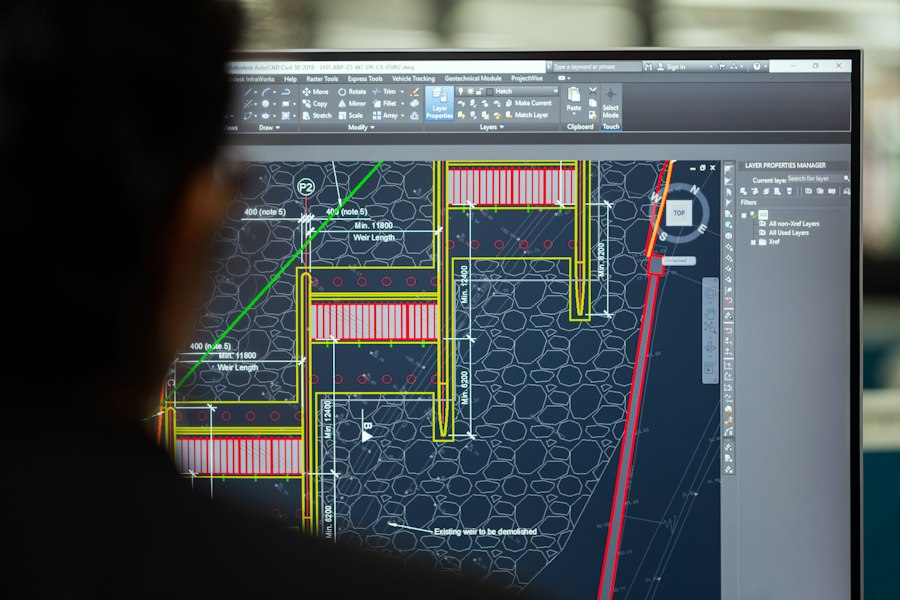
In practice that knowledge sits scattered across SharePoint, BIM models, AutoCAD drawings, email threads, project management tools and the heads of senior colleagues. Searching costs more time than re-thinking. So the team re-thinks. And the pattern sinks deeper into the archive.
Knowledge then is no longer an advantage, but dead weight.
What a digital colleague does here: a digital colleague works from the full project archive and brings relevant knowledge into the work process. Not as a search engine someone has to dig through, but as a colleague that understands your question and shows you three earlier projects that strongly resemble it, including what worked and what didn't.
4. Standards and certifications change faster than anyone tracks
The regulatory landscape is dynamic. Eurocodes get revised, NEN standards updated, customer-specific specifications change, certification regimes shift. For an engineering firm that means: continuously tracking, translating, distributing internally.
In practice, current standard knowledge often hangs on a few specialists. The rest of the organisation knows it's stored somewhere, but isn't sure which version was valid at which reference date. At audits, claims or revisions, that difference can be critical.
One incorrectly applied standard version can cost more than a complete revision round.
What a digital colleague does here: a digital colleague keeps the standards landscape centrally up to date and can feed back per project which version was valid, what has changed since and where the impact lies. Every engineer works from the same, current source. The specialist isn't replaced, but is interrupted less often for basic questions.
5. Multi-disciplinary work falters on tool differences
Civil works in AutoCAD and Revit, mechanical in SolidWorks or Inventor, electrical in its own tool, project management in Excel or Asana, customer communication in email and Teams. Every discipline has good reasons to stay in its own tool.
The problem arises at the handoffs. What sits in drawing A also has to sit in calculation B and report C. With every change, someone has to update manually. Forgotten? Then someone runs behind the facts, often at the wrong moment in the project.
Design quality rarely suffers from the tools, but almost always from the handoffs between them.
What a digital colleague does here: a digital colleague reads across the different tools and makes sure changes don't silently linger. It signals when an adjustment in the drawing impacts the calculation or planning, and informs the disciplines involved. Everyone stays in their own tool, but works on the same, current project.
The next step: more reuse of knowledge, less searching
The question for engineering firms is no longer just "how do we find more engineers?". Equally important becomes: "how do we make sure our engineers actually do engineering work, not mostly archive work?".
That's why we believe the next step in engineering doesn't consist of yet another BIM licence, yet another knowledge portal or yet another personal AI assistant. The next step is a digital colleague.
A digital colleague that works from shared project knowledge, surfaces earlier design choices, has the standards context ready and links disciplines together. Not to replace engineers, but to enable them to do engineering work again.
The engineering firms that build a lead in the coming years won't necessarily be the ones with the most engineers. They will be the ones who actually leverage the knowledge they already hold.
Through our Industry Ambassadors Programme we're looking for 4 engineering firms to shape the new AI standard for engineering together. A digital industry colleague that lives inside your own systems and processes, not yet another tool sitting beside them.
One digital colleague per department, who knows your systems and processes.
Discover how BEP works and what it can mean for your organisation.