
Most AI discussions focus on individual productivity. ChatGPT for marketing, Copilot for finance, Claude for development. Every employee gets their own AI assistant and works faster, smarter and more efficiently. That delivers value. But it misses a much bigger question.
Where does most of the waste actually emerge in organisations? Not within functions, but between functions. Between sales and operations. Between engineering and production. Between service and planning. Between management and execution.
That's where information gets lost. That's where misunderstandings emerge. That's where people wait for each other. That's where actions get forgotten. That's where meetings, dashboards and managers emerge.
And that's where, in our view, the biggest promise of AI lies. Not in optimising individuals, but in improving how work moves between people.
Most organisations don't have a knowledge problem
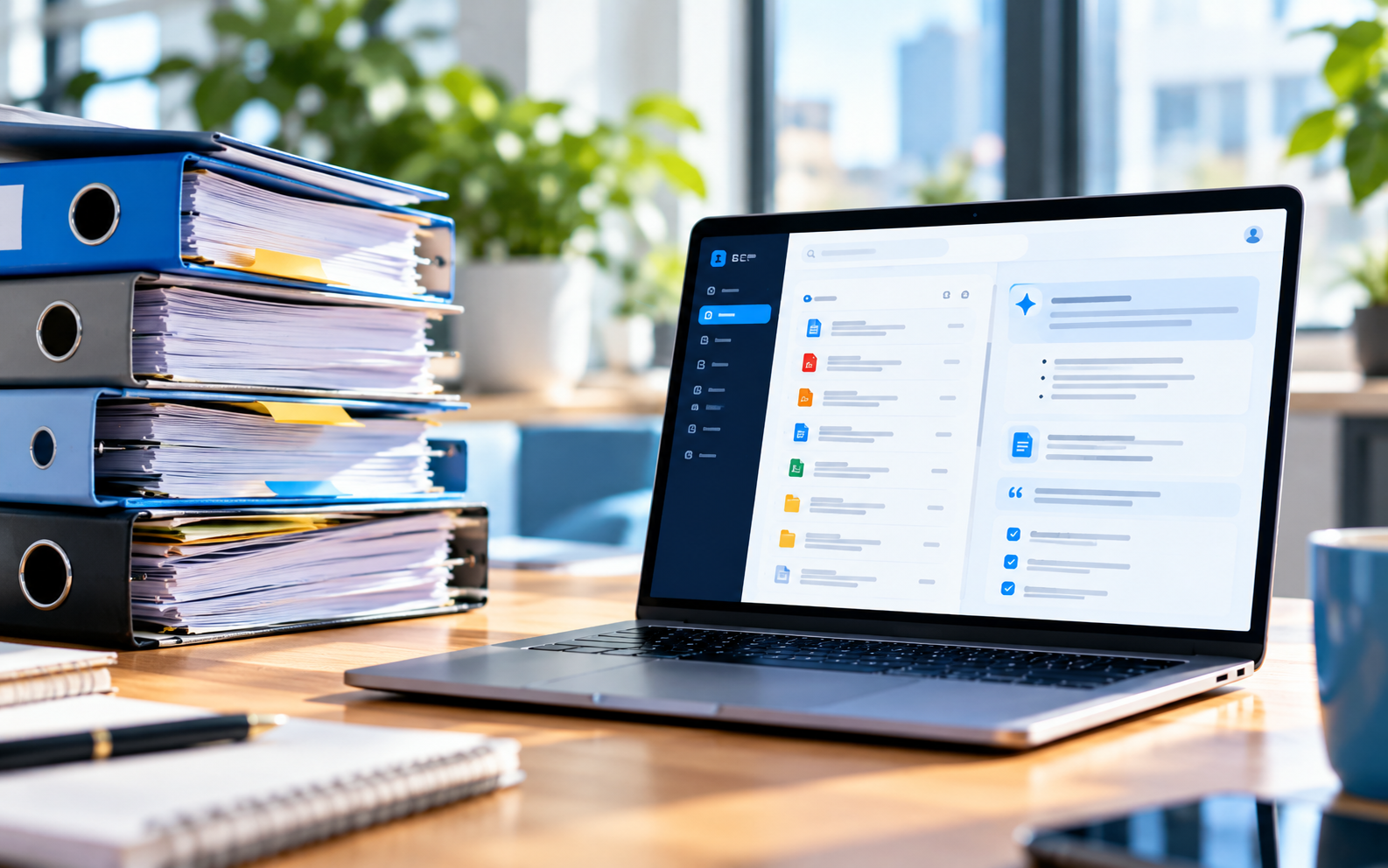
When organisations get stuck, it's often assumed that employees lack information. In practice we see something different. Most companies already possess enormous amounts of knowledge: documentation, processes, manuals, reports, ERP systems, CRM systems, project files, Teams chats and mailboxes.
The problem is rarely that knowledge is missing. The problem is that knowledge doesn't reach the right place at the right moment.
A planner waits for information from engineering. Engineering waits for a reply from sales. Service searches for an agreement that sits somewhere in a mailbox. Operations tries to figure out why a decision was made months ago.
The company often knows. But the company can't make that knowledge flow.
Why individual AI doesn't automatically lead to better collaboration
The first generation of AI tools focuses primarily on individual productivity. That's logical. An employee can write faster, analyse faster, summarise faster, research faster.
But organisations don't consist of isolated individuals. They consist of dependencies. An employee that works 30% faster doesn't automatically mean the team performs 30% better.
If anything: when everyone uses their own AI, sometimes more fragmentation emerges. Everyone works from their own context, everyone generates their own answers, everyone optimises their own work. While the biggest challenges usually emerge at the handover moments between people.
1. The best way of working becomes scalable
Every organisation has employees who are exceptionally good at their work. Not because they have more information, but because they know what to watch for. Which risks matter. Which checks are needed. Which questions to ask.
Normally it takes years to transfer that experience. With AI, part of that way of working becomes explicit and scalable. That doesn't only make the best better; the average level of the team rises.
The biggest gain isn't in strengthening the top performers. The biggest gain is in narrowing the distance between experienced and less experienced colleagues.
2. The biggest delay arises between departments
Many organisations focus their improvement initiatives on processes within departments. But most delay arises exactly at the moments when work is handed over. A customer question goes from sales to operations, a change goes from engineering to production, a fault goes from service to planning.
Every handover introduces risk. Context is lost, assumptions emerge, actions stall.
A digital colleague that works from shared context can support these handovers. Not by replacing people, but by ensuring information, agreements and progress stay visible as work moves through the organisation.
3. Not automation, but task allocation determines success
Many organisations start their AI journey with the same question: "What can we automate?". That seems logical, but often it's not the right question.
Successful organisations first look at task allocation. Which work is repetitive? Which work revolves around gathering information, checking and following up? Which work specifically requires human judgement?
The most value doesn't emerge when AI does everything. The most value emerges when AI does the right work.
4. Context matters more than intelligence
A generic language model can sound impressive. But it doesn't know your customers, your processes, your agreements, your exceptions. Yet it formulates answers with great conviction.
That's why we believe context will ultimately matter more than pure model quality. The smartest AI doesn't win. The AI that understands how your organisation works wins.
Because reliability doesn't emerge because a system knows a lot. Reliability emerges because a system knows what it doesn't know.
5. The future of AI revolves around coordination
In recent years AI was mostly about individual productivity. In the coming years the focus shifts to something else: coordination.
How do we ensure knowledge flows faster? How do we ensure actions don't stall? How do we ensure departments collaborate better? How do we ensure work is less dependent on individual employees?
Those aren't technology questions. Those are organisation questions. And that's exactly where we expect the biggest impact of AI.
The next step
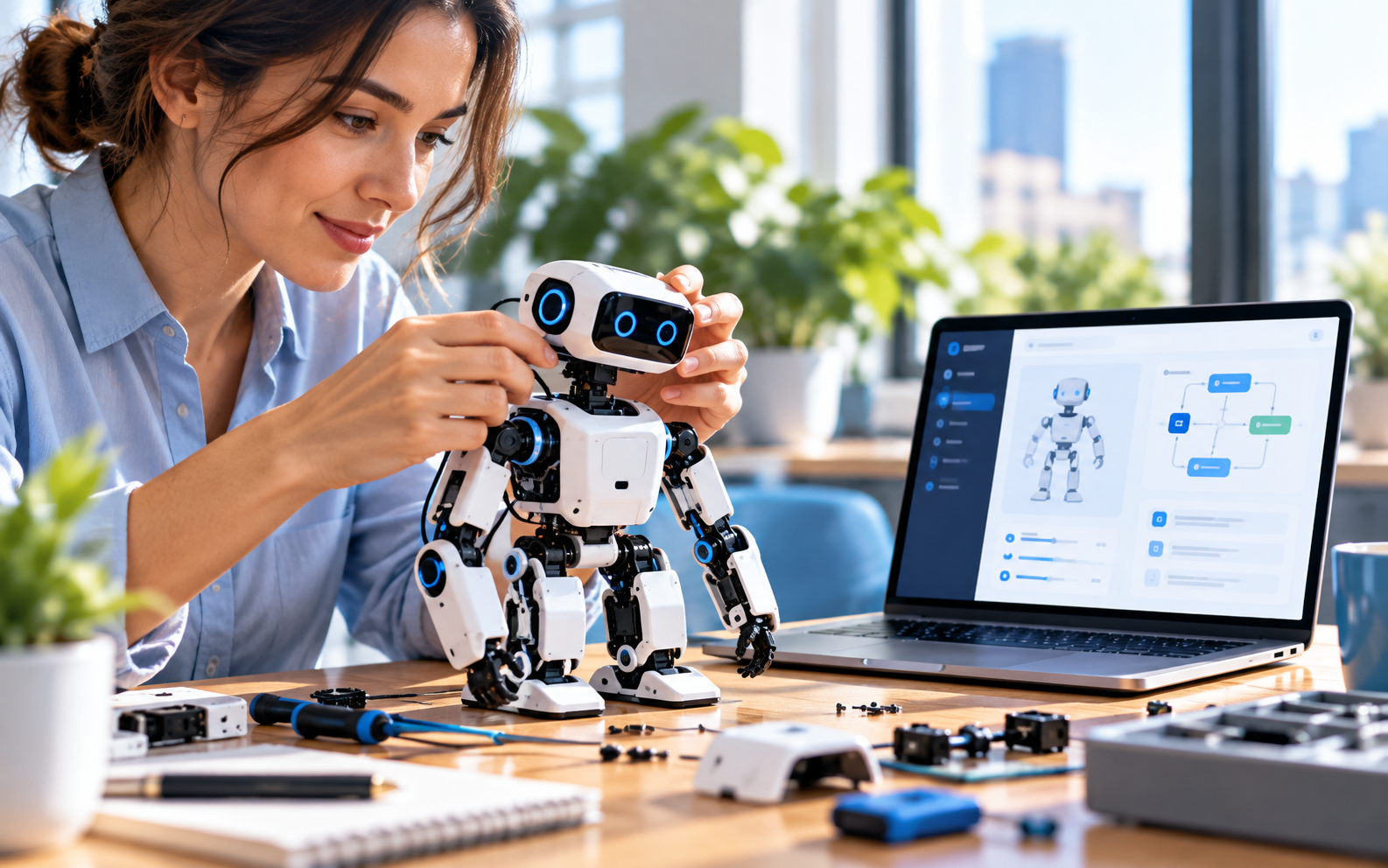
We believe the next generation of AI doesn't consist of a personal assistant for every employee. We believe in digital colleagues. Digital colleagues that work from shared knowledge, understand processes, follow up on actions, guard context, and help work move smoothly through an organisation.
Because ultimately, organisations don't win because individual employees work faster. They win because work moves faster, smarter and more reliably between people.
And that's where, in our view, the biggest AI opportunity of this decade lies.
One digital colleague per team, who knows your systems and processes.
Discover how BEP works and what it can mean for your organisation.